· Don Schmidt · Sleep Disorders · 6 min read
Why You Have Trouble Sleeping Every Night and What to Do About It
Trouble sleeping every night isn't just bad luck. Learn the real reasons insomnia keeps happening, and the CBT-I strategies that actually break the cycle.
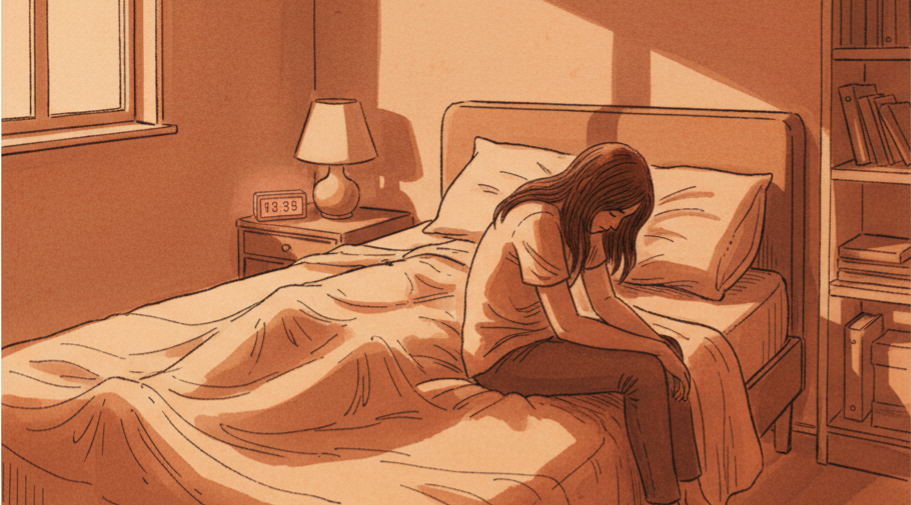
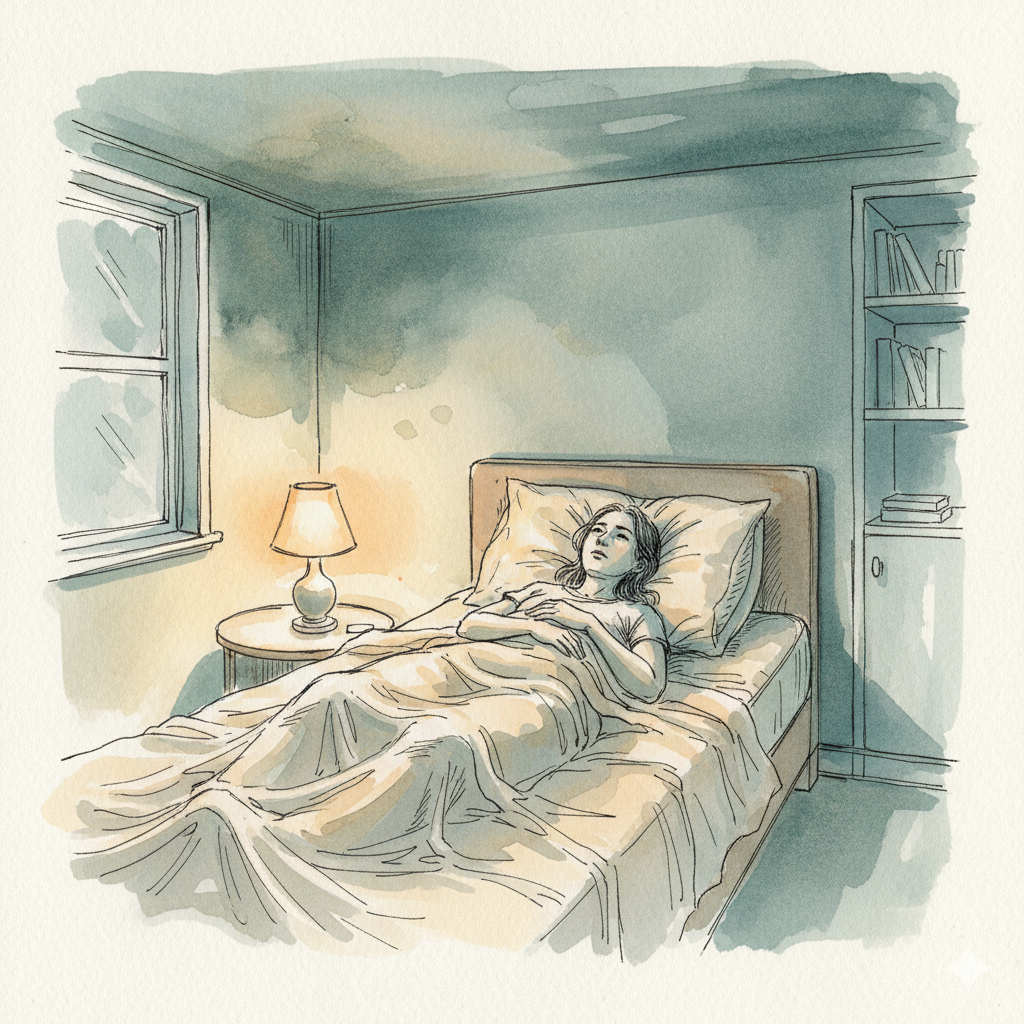
You lie down, you’re tired, and then nothing happens. Or you fall asleep fine but wake up at 3 a.m. and can’t get back. Maybe you’ve been doing this for weeks. Maybe years. If you have trouble sleeping every night, you already know how demoralizing it gets — the watching the clock, the mental math about how many hours you have left, the dread of tomorrow.
If your main problem is lying awake at lights-out, see difficulty falling asleep. If it’s the 3 a.m. wake-up, our waking up at 3am action plan walks you through what to do in the moment. And if mornings are the hardest part, read about trouble waking up.
You’re not imagining it, and you’re not broken. But something is clearly keeping your sleep from working the way it should. Understanding what’s behind it is the first step toward actually changing it.
The Most Common Reasons People Have Trouble Sleeping Every Night
Poor sleep isn’t usually caused by one thing. It’s almost always a combination of factors that compound each other over time.
Stress and anxiety are the most frequent culprits. Your brain is wired to stay alert when it perceives a threat, and for a lot of people, that threat response gets stuck in the “on” position. Work pressure, relationship tension, financial worry — your nervous system doesn’t distinguish between an actual emergency and a mental replay of an uncomfortable conversation you had at lunch. The result is a body that won’t wind down when you need it to.
Irregular sleep timing is another major driver. Your internal clock — the circadian rhythm — runs on consistency. When your sleep and wake times shift around from day to day, your body doesn’t know when to release the hormones that make you sleepy. Sleeping in on weekends feels like a logical fix, but it actually makes things worse by shifting your rhythm further out of alignment.
Caffeine, alcohol, and screens all interfere with sleep in ways that are easy to underestimate. Caffeine has a half-life of five to six hours, meaning a 3 p.m. coffee still has half its stimulating effect at 9 p.m. Alcohol makes you drowsy initially but disrupts deep sleep and causes middle-of-the-night wake-ups. And bright screens in the evening suppress melatonin, the hormone that signals to your brain that it’s time to sleep.
Underlying health conditions also play a role. Sleep apnea, restless legs syndrome, chronic pain, and hormonal changes (particularly during perimenopause — a topic explored in depth in this guide to CBT-I for perimenopause) can all fragment sleep in ways that are hard to address with lifestyle changes alone.
The Thought Patterns That Keep Insomnia Going
Here’s what most people don’t realize: once you’ve had trouble sleeping every night for a while, the sleep problem starts feeding itself.
You start dreading bedtime. You lie there monitoring your own sleep — “Am I asleep yet? I need to sleep. Why am I not sleeping?” That monitoring is mentally activating, which makes sleep even harder. You start to associate your bed with frustration and wakefulness rather than rest. The bed itself becomes a trigger.
Then come the compensatory behaviours. You go to bed earlier to “catch up.” You nap during the day. You cancel plans to protect your sleep. These feel logical, but they often backfire. Going to bed before you’re actually sleepy means more time lying awake. Napping takes the pressure off nighttime sleep, making it shallower and harder to maintain.
This cycle is genuinely hard to break on willpower alone, which is why sleep hygiene tips — avoid caffeine, go to bed at the same time, keep your room cool — often make only a small dent for people with persistent insomnia. They address the inputs, but not the underlying pattern that’s driving the problem.
What Actually Works When Sleep Tips Aren’t Enough
If you’ve tried the standard advice and you’re still having trouble sleeping every night, it’s worth knowing that there’s a more effective approach available.
Cognitive Behavioural Therapy for Insomnia, or CBT-I, is the gold-standard treatment for chronic insomnia. It’s recommended as the first-line treatment ahead of sleeping pills by most major sleep medicine organizations, including those in Canada. What is CBT-I? It’s a structured program that targets the thought patterns, behaviours, and conditioned responses that keep insomnia going — not just the symptoms.
CBT-I typically involves a few key components. Sleep restriction therapy temporarily limits how much time you spend in bed so that the time you do spend there is consolidated, efficient sleep. Stimulus control reconnects your bed with sleepiness rather than wakefulness. Cognitive restructuring helps you identify and challenge the anxious thoughts that spike when you lie awake. Together, these techniques reset the patterns that sustain insomnia.
Unlike sleep medication, CBT-I addresses the root cause rather than masking the symptoms. And the results tend to last — people who complete CBT-I maintain improvements long after the program ends. If you’re curious how the approach compares to medication, this guide to CBT-I versus sleeping pills breaks it down clearly.
For people whose insomnia is tangled up with anxiety, this piece on anxiety-driven insomnia gets into the specific patterns that CBT-I is designed to untangle.
Small Adjustments Worth Making Right Now
While CBT-I is the most effective treatment for persistent insomnia, there are a few evidence-backed habits that can genuinely support better sleep — not because they’ll fix chronic trouble on their own, but because they stop you from actively working against yourself.
Getting up at the same time every morning, regardless of how poorly you slept, is probably the single most effective habit you can build. It anchors your circadian rhythm and builds sleep pressure throughout the day. Don’t negotiate with yourself on this one — consistency matters more than the exact time you choose.
Keeping the bedroom for sleep and sex only is worth taking seriously. Reading, scrolling, watching TV in bed all weaken the mental association between bed and sleep. Over time, that association is what makes you feel drowsy when you get into bed, rather than alert.
Managing your relationship with the clock is also important. Checking the time when you wake up at night tends to make things worse. You calculate how long until the alarm, start worrying, and activate your brain further. If you can, turn the clock away.
When It’s Time to Get Proper Help
There’s no exact number of bad nights that officially makes insomnia a “real” problem, but if you’ve been having trouble sleeping every night for more than three weeks, and it’s affecting how you function during the day, that’s worth taking seriously.
Many people spend years assuming poor sleep is just their normal, or that they need to try harder to relax. Neither is true. Chronic insomnia is a treatable condition, and the most effective treatment — CBT-I — is available in Alberta without a referral.
If you’re ready to do something about it, reach out to book a consultation. You don’t need to keep white-knuckling your way through sleepless nights hoping things will eventually improve on their own.
Assess Your Sleep Quality Today
Take our My Sleep Health Score assessment to get personalized insights about your sleep patterns and discover how CBT-I can help you achieve better sleep.

Don Schmidt
15+ years of experience in sleep therapy and Cognitive Behavioral Therapy for Insomnia (CBT-I). Passionate about connecting individuals struggling with sleep disorders to evidence-based, non-medical treatment solutions. Author of hundreds of articles and comprehensive guides on sleep health, CBT-I techniques, and overcoming insomnia. When not helping clients achieve better sleep, you can find me hiking with my family and dogs or enjoying a good book.
Ready to connect with a provider?
Allow us to connect you with a provider who can help.